Property · 5 May 2026
Understanding the Running Costs of a Private Villa in Thailand
While the capital outlay of acquiring a private home in Thailand is straightforward, understanding ongoing operational expenditures is essential for accurate long-term stewardship. From utility loads to communal management and pool upkeep, a realistic breakdown of monthly outgoings provides clarity for prospective owners.
Acquiring a private residence requires evaluating both the initial commitment and the recurring investments that maintain the property over decades. In Thailand, where tropical climatic conditions dictate continuous cooling and constant swimming pool filtration, operational expenditures follow distinct patterns. Understanding these elements—utilities, specialised pool care, landscape maintenance, and estate management fees—enables owners to establish clear baseline budgets for private villa living.
Utility Consumption: Electricity and Water Dynamics
Utilities typically form the largest portion of a villa's operational budget. Electricity tariffs in Thailand standardly range between 4 and 6 THB per kilowatt-hour (kWh). However, total monthly electricity consumption fluctuates heavily depending on occupancy habits, equipment specifications, and architectural thermal performance.
Air conditioning represents the primary power draw in a private residence. In full-time residences, overall monthly electricity bills typically range from 8,000 to 25,000 THB. For properties occupied year-round, annual electrical expenditure often settles between 180,000 and 300,000 THB. A notable sub-component of this expenditure is the dedicated swimming pool pump; running a filtration pump for eight to ten hours per day typically adds between 3,000 and 5,000 THB to the monthly electricity figure alone.
Mains water is generally billed at rates ranging from 15 to 50 THB per cubic metre, with many municipal frameworks charging between 20 and 40 THB per cubic metre. For a private home incorporating irrigated garden areas and an open swimming pool subject to evaporation, water bills typically range from 1,000 to 3,000 THB each month.
Private Pool and Garden Care
A private swimming pool requires consistent technical oversight to maintain chemical balance and protect filtration machinery. Basic pool service contracts, covering regular brushing, vacuuming, and water chemistry checks, generally range from 2,000 to 5,000 THB per month. The routine chemicals required—principally chlorine or salt, alongside pH balancers—frequently account for 500 to 600 THB per month within standard servicing regimes.
Depending on the scope of specialized equipment maintenance, filter media replacement, and periodic deep servicing, broader annual upkeep figures for pool installations can span from 60,000 to 150,000 THB. Combining pool care with groundskeeping yields a combined baseline for typical grounds maintenance of approximately 6,000 to 15,000 THB per month for standard standalone layouts.
Estate Management in Protected Communities
Many private residences in Thailand sit within managed, master-planned developments. In these protected villages, owners contribute to common area management funds that oversee perimeter security, internal road lighting, communal drainage, refuse disposal, and gate operations.
Monthly maintenance outgoings within protected communities commonly range from 5,000 to 20,000 THB. The rate is typically indexed to the physical footprint of the private plot or calculated as a fixed community contribution. While standalone properties outside established developments avoid these formal contributions, they frequently incur equivalent or higher direct costs to independently arrange private security patrols, private gate maintenance, and external infrastructure repairs.
Occupancy Patterns and Financial Variance
Operational budgets do not remain static throughout the year; they correlate directly with residency patterns. A property maintained solely as a full-time family residence generates continuous utility consumption, regular pool chemical replenishment, and sustained interior wear.
Conversely, when a home is held as a private retreat and left vacant for extended intervals, the operational profile changes significantly. Base electrical draw drops to essential security systems, smart monitoring, and basic timer-driven pool filtration. While preventive maintenance remains mandatory to counter humidity and mechanical stagnation, the baseline variable utility spend diminishes substantially compared to continuous occupancy.
Broader industry benchmarks indicate that comprehensive annual maintenance, incorporating mechanical servicing and minor fabric upkeep alongside utilities, often approximates 5 to 8 percent of property value over extended ownership cycles when managed across high-service paradigms.
Architectural Influence on Long-Term Overheads
The architectural execution of a home directly governs its ongoing running costs. Deep roof overhangs, deliberate cross-ventilation corridors, and modern inverter-driven cooling machinery diminish the daily electrical load demanded by high ambient temperatures. Similarly, efficient pump setups and well-engineered water management systems mitigate base monthly outgoings.
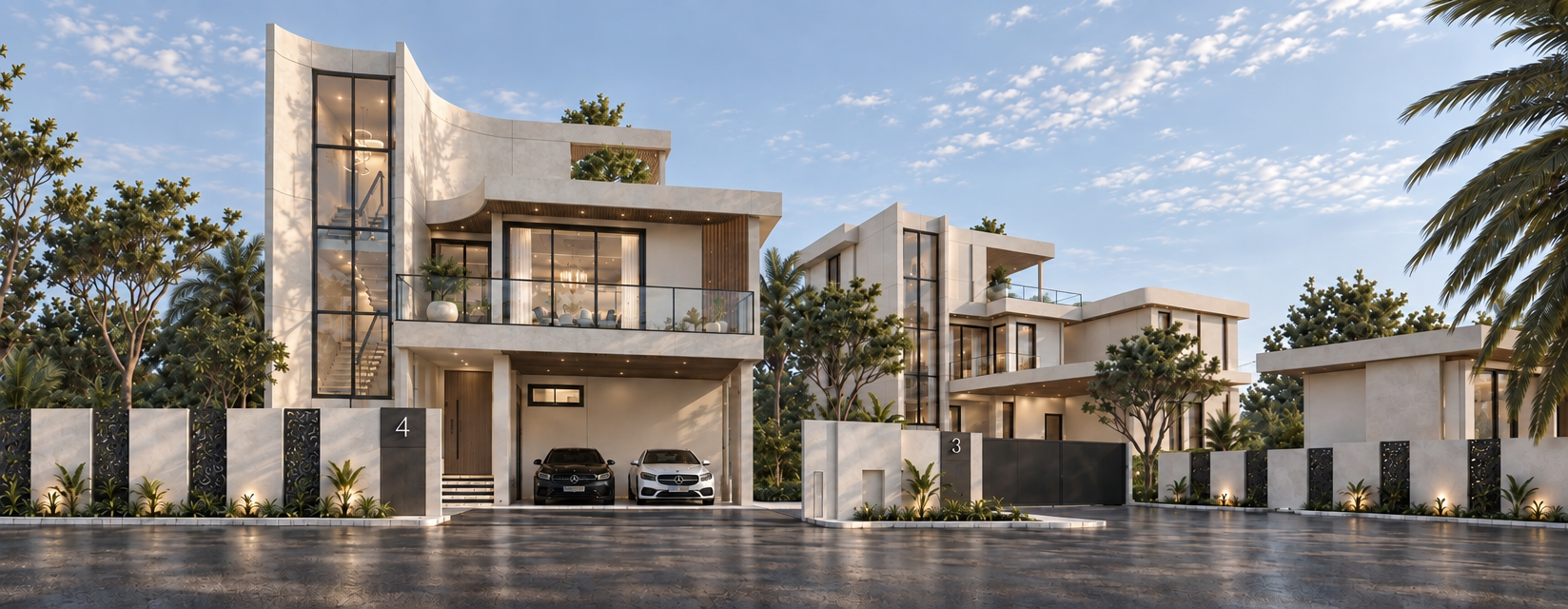
At The Vista Hua Hin, a boutique collection of 12 private residences by Dreamvista Development Co., Ltd., architectural consideration underpins every spatial decision. Designed with full Chanote titles within a licensed residential development, the project features both V Series single-storey residences and X Series two-storey residences with an internal lift and private rooftop terrace. Fully furnished from THB 12.9M, these homes are conceived with an emphasis on enduring structural simplicity, deliberate thermal comfort, and predictable operational requirements.
Exclusive Private Residences
A private collection of architecturally distinctive residences in Hua Hin.
Explore the collection