Living · 1 September 2026
Long-Stay Visa Frameworks for Second Home Owners in Thailand
Establishing a secondary residence overseas requires an understanding of both property tenure and the legal permissions governing physical presence. For those considering a home in Thailand, several distinct immigration frameworks provide structured, long-term stability.

The Core Retirement Framework: Non-Immigrant O and O-A
For foreign nationals aged 50 and older, the conventional entry point into extended residence is the retirement visa category. This framework is split primarily between the standard Non-Immigrant O visa and the Non-Immigrant O-A visa, each designed to accommodate long-term stays supported by proven personal funds.
The baseline financial requirements for these routes mandate demonstrating financial self-sufficiency. Applicants must show an account balance of at least 800,000 THB deposited in a Thai bank account, an ongoing monthly income or pension of at least 65,000 THB, or an acceptable combination of deposit and annual income that meets the 800,000 THB total threshold.
The Non-Immigrant O-A visa permits an initial stay of up to one year. Because this visa is typically obtained prior to arrival via a Royal Thai Embassy or Consulate, additional evidentiary thresholds apply. These include a formal police clearance certificate, a medical certificate confirming the absence of prohibited medical conditions, and compliant health insurance coverage. Depending on the issuing authority's specific criteria, health insurance policies must demonstrate comprehensive medical coverage, commonly set at a minimum of 3,000,000 THB or 100,000 USD. Holders of this visa who intend to travel abroad during their period of permission must secure a re-entry permit to preserve their permission to stay upon return.
Extended Multi-Year Residence: Non-Immigrant O-X
For individuals seeking a longer planning horizon without the necessity of annual renewals, the Non-Immigrant O-X visa offers an extended framework. This visa grants permission to stay for a period of five years per issuance, with the potential to extend for an additional five years, establishing a ten-year total duration.
The financial thresholds for the Non-Immigrant O-X visa reflect its expanded term. Applicants must maintain a deposit of no less than 3,000,000 THB in an account held within a Thai bank, or provide documentation of a 1,800,000 THB deposit alongside an annual income of at least 1,200,000 THB. Alongside these elevated capital requirements, the category maintains strict insurance mandates, requiring continuous health insurance coverage of at least 3,000,000 THB throughout the duration of stay.
The Long-Term Resident (LTR) Visa: Wealthy Pensioners
A modern addition to Thailand’s legal residency landscape is the Long-Term Resident (LTR) visa program. Structured to attract qualified foreign residents, the LTR program offers a ten-year renewable framework, granted initially as a five-year permission to stay that can subsequently be extended for five further years upon ongoing compliance with program conditions.
Within this program, the Wealthy Pensioner category is designated for retirees aged 50 and older who hold consistent passive income or stable pension streams. Qualification requires documented annual pension or passive revenue—such as investment income—of at least 80,000 USD. Alternatively, applicants with a lower annual passive income of at least 40,000 USD can qualify if they have invested no less than 250,000 USD in qualifying Thai assets.
Critically for second-home buyers, qualifying assets under this lower income threshold include direct investment in Thai real estate. The applicant must hold the property ownership in their own name, and the investment must already be in place prior to submitting the LTR visa application. Where an eligible property is owned jointly, the investment valuation is apportioned pro-rata among the titled owners. Alongside extended residency security, the LTR visa provides administrative conveniences, including eased reporting structures and provisions for family dependents.
Integrating Residency Frameworks with Property Acquisition
Securing lawful residence is closely linked to how property transactions are completed. Long-stay residents establishing a permanent or seasonal base often look for legal and structural clarity in their real estate acquisitions. Aligning a long-term visa application with real estate purchase requires precise coordination, particularly regarding the timing of capital transfers, title registration, and legal verification.
Where an applicant intends to leverage property ownership toward qualifying for programs like the LTR Wealthy Pensioner route, holding verified, unencumbered title deeds is mandatory. Institutional clarity—such as acquiring freehold property backed by a full Chanote title within a licensed residential development—ensures that documentation satisfies both land office standards and immigration audits.
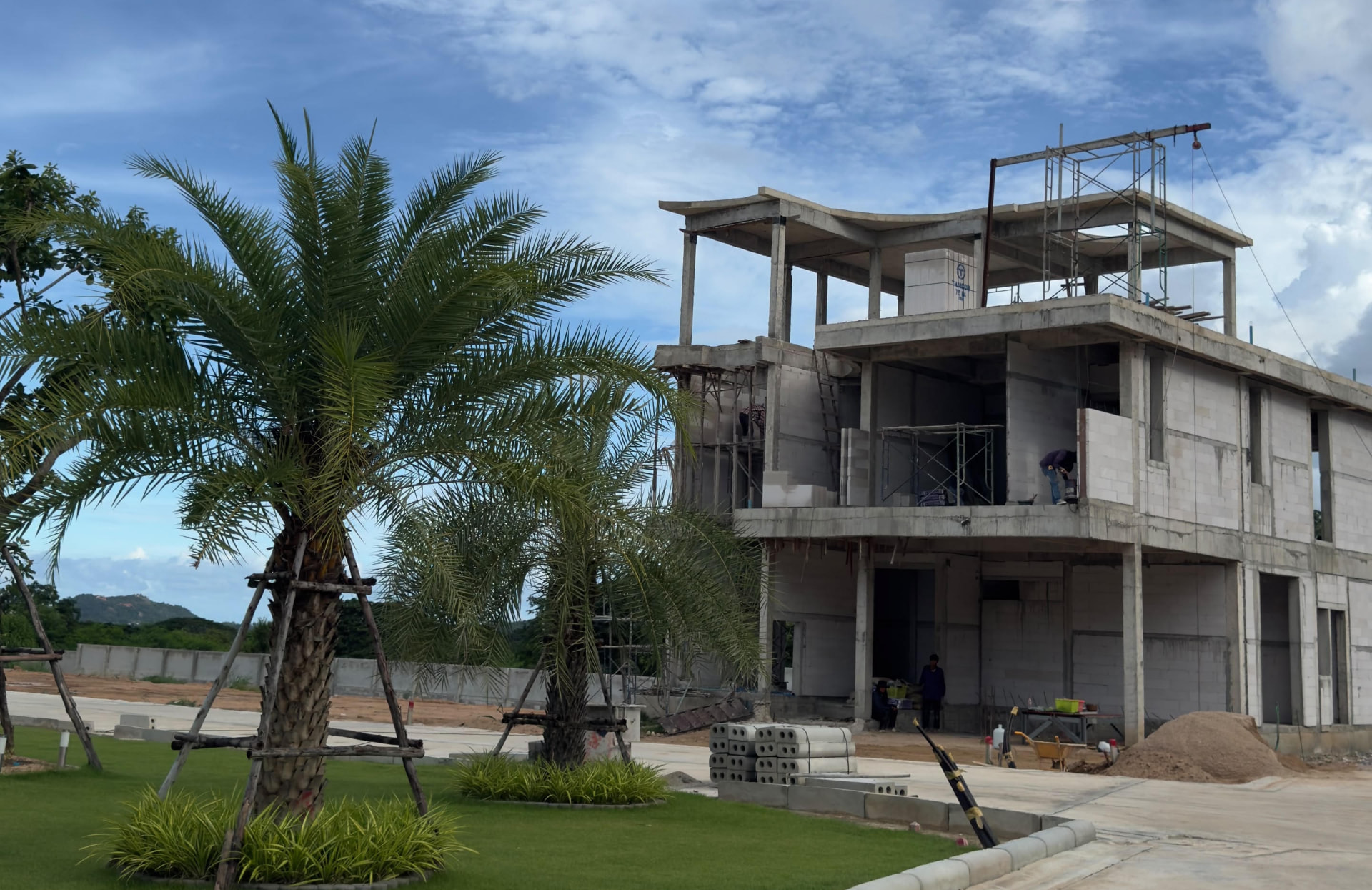
At The Vista Hua Hin, private ownership is anchored by clear legal foundations. Comprising a boutique collection of 12 residences—featuring single-storey V Series homes and two-storey X Series residences equipped with a lift and a private rooftop terrace—the licensed residential development offers full Chanote titles and payment schedules structured around construction milestones, providing a transparent foundation for those establishing a long-term residential base in Hua Hin.
Exclusive Private Residences
A private collection of architecturally distinctive residences in Hua Hin.
Explore the collection