Design · 4 August 2026
Furnishing for the Tropics: Materiality, Airflow, and Longevity
Furnishing a home in a tropical environment demands a distinct approach to materiality. The convergence of sustained humidity, ultraviolet radiation, and coastal air tests the physical integrity of furniture, making material selection a foundational design consideration rather than an afterthought.
Furnishing an architectural residence in a tropical climate presents a specific set of physical challenges. High ambient humidity, sustained warmth, ultraviolet radiation, and, in coastal areas, salt-laden sea air all interact with interior surfaces on a daily basis. When materials are chosen purely for their visual appeal in temperate conditions, they can warp, corrode, or degrade prematurely. A well-considered interior design in the tropics prioritizes longevity, structural honesty, and the natural breathability of every element.
Designing for these conditions does not mean compromising on sophistication. Instead, it invites a refined, tactile palette that draws strength from natural resilience and engineered durability.
Dense Hardwoods and Natural Oils
Hardwoods remain an essential anchor for interior framing, cabinetry, and freestanding furniture. However, not all timber behaves predictably in the presence of sustained humidity. Softwoods and poorly cured woods readily absorb moisture from the air, expanding during humid periods and contracting when interior air conditioning is active, leading to joint failure and surface cracks.
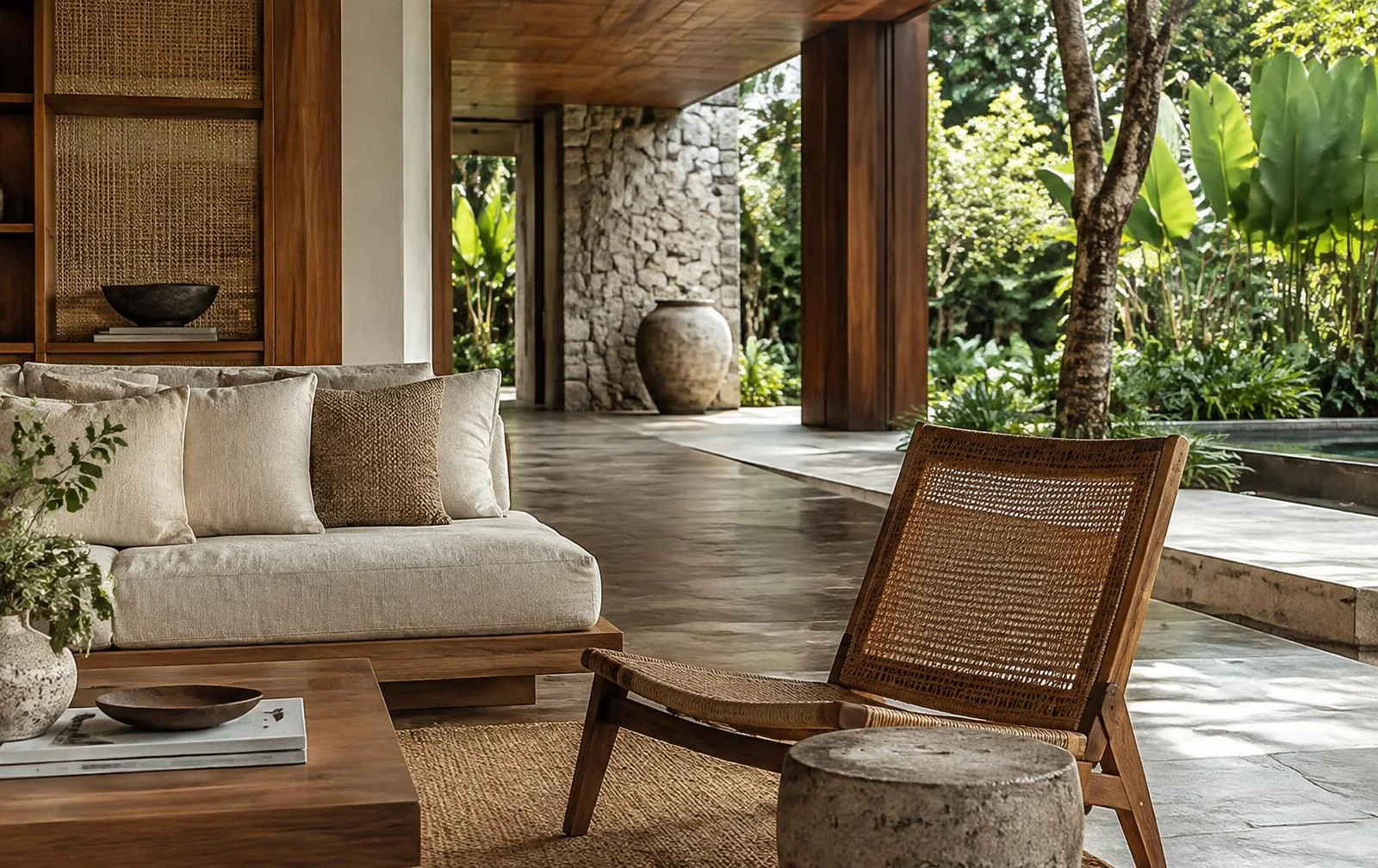
Teak stands apart as one of the most reliable timbers for tropical conditions. Dense and naturally rich in protective oils and silica, teak possesses an inherent resistance to moisture, rot, and insect damage. Even when left untreated or finished with simple natural oils, teak weathers humidity with minimal movement. Over time, it develops a soft patina that integrates seamlessly into a calm, understated interior. When properly sourced and crafted, teak pieces function as long-term fixtures that endure decades of climatic exposure.
Permeability and Woven Structures
Air circulation is a core principle of tropical architecture, and this logic extends directly to furniture forms. Solid, enclosed volumes tend to trap heat and restrict airflow, whereas open-frame designs allow air to move naturally through a living space.
Natural woven materials such as rattan, cane, and bamboo are inherently suited to this environment. The fibrous cellular structure of these plants allows them to breathe, flexing with ambient atmospheric changes without losing their structural cohesion. Sofas and lounge chairs detailed with woven cane or rattan backrests reduce visual weight while actively promoting cross-ventilation. Bamboo, celebrated for its high tensile strength and rapid renewability, offers an elegant, lightweight alternative for secondary seating and structural accents. These permeable materials soften the boundary between indoor living rooms and covered terraces, responding intuitively to the climate.
Resilient Metals and Synthetic Weaves
While natural plant fibers perform admirably indoors, hybrid indoor-outdoor zones—such as covered verandas, loggias, and poolside terraces—demand materials that can endure direct sun exposure and sudden shifts in weather.
Metals must be specified with corrosion resistance in mind. Untreated ferrous metals oxidise rapidly in humid or coastal air. In contrast, high-grade powder-coated aluminum offers exceptional durability, structural lightness, and imperviousness to rust. It forms an ideal framework for outdoor dining tables, loungers, and exterior seating.
For outdoor upholstery and lounge frames, high-density synthetic wicker engineered from polyethylene provides a weather-stable alternative to natural rattan. High-quality synthetic fibers resist UV degradation, retain their tensile strength through heavy rainfall, and clean easily without absorbing environmental moisture. Pairing aluminum structures with durable synthetic weaves creates furniture capable of withstanding the elements without losing its tailored form.
Textiles, Breathability, and Soft Furnishings
Textiles represent the most vulnerable layer in a tropical residence. Fabrics that trap moisture or retain body heat quickly compromise the comfort of a home. Heavy synthetics, non-breathable leathers, and low-grade foams are prone to holding dampness, which can encourage mildew and surface deterioration.
For upholstery and soft furnishings, breathable natural fibers such as linen are particularly effective. Linen fibers absorb moisture without feeling wet to the touch and release humidity rapidly into circulating air, maintaining a crisp, cool contact surface. For areas subject to intense sunlight or occasional outdoor exposure, high-performance solution-dyed acrylics provide critical UV resistance while retaining a soft hand-feel.
Cushion construction requires equal attention. Open-cell, quick-drying foams paired with breathable mesh under-linings allow air to circulate freely through the seat cushions. Incorporating removable, washable slipcovers further ensures that fabrics can be maintained easily throughout the changing seasons.
A Grounded Palette
Beyond functional performance, materials inform the emotional atmosphere of a home. In tropical settings, strong natural light can wash out delicate tints or make overly reflective surfaces feel harsh. A grounded palette of natural materials balances the intensity of tropical sunlight.
Warm sand tones, sun-bleached woods, stone, and muted earthy greens create a restful backdrop that directs attention outward toward private gardens and natural vistas. By allowing materials to express their inherent textures—the grain of oiled teak, the weave of split cane, the weave of unbleached linen—an interior achieves a quiet, timeless elegance rooted in its environment.
At The Vista Hua Hin, this balance of material integrity and tropical sensibility defines the approach to living. The 12 private residences, available fully furnished, balance architectural clarity with durable, climate-considered interior selections, creating spaces designed to mature gracefully in the Hua Hin environment.
Exclusive Private Residences
A private collection of architecturally distinctive residences in Hua Hin.
Explore the collection