Hua Hin · 14 April 2026
Beyond the Coast: Landscapes, Vineyards, and National Parks Near Hua Hin
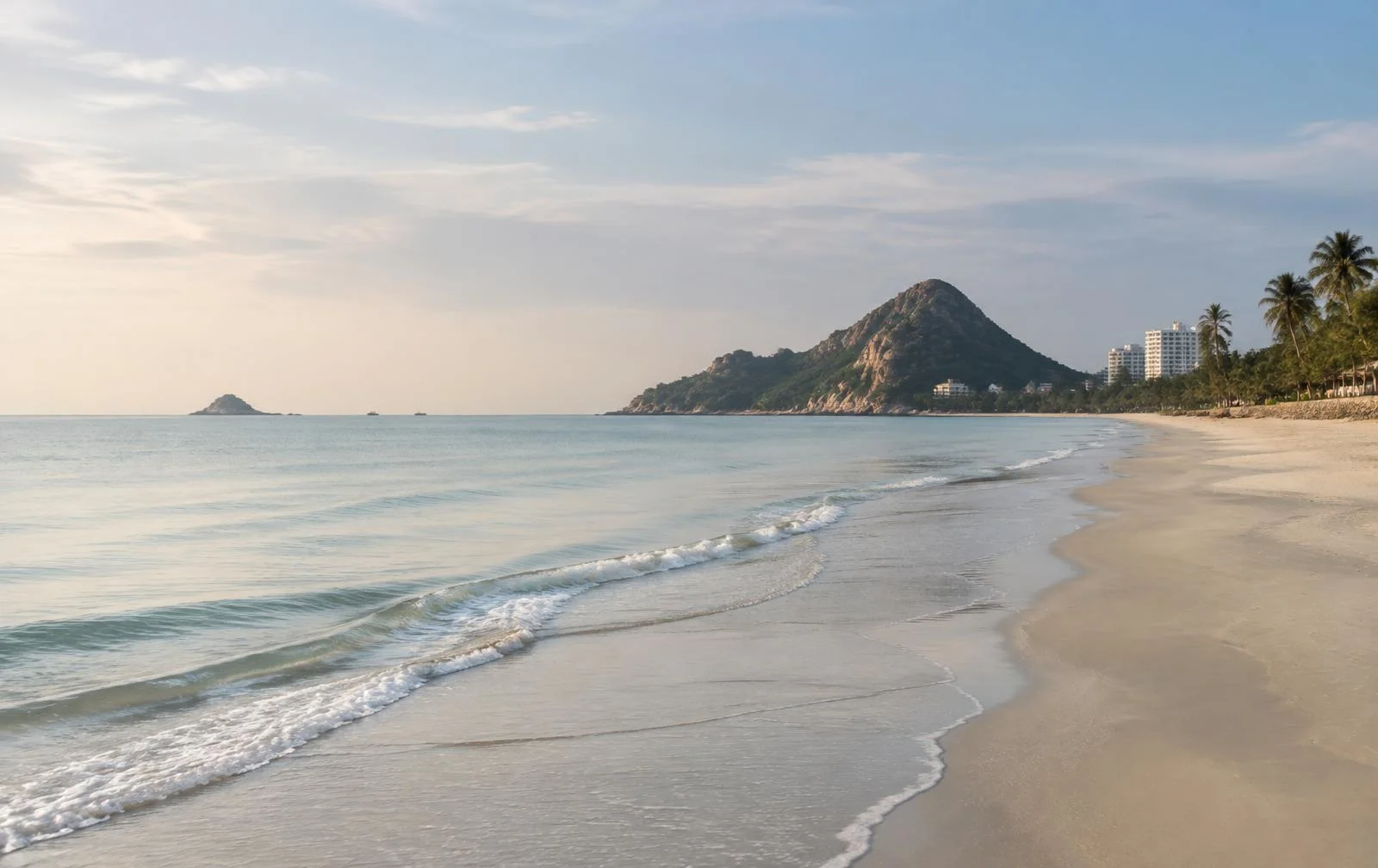
While Hua Hin has long been defined by its coastline, the surrounding topography reveals a quieter, geographically diverse hinterland. Within a short journey from the centre, the coastal plain yields to striking limestone massifs, sheltered sea caverns, and inland agricultural valleys that offer an entirely different perspective on regional living.
The Coastal Topography and Khao Sam Roi Yot
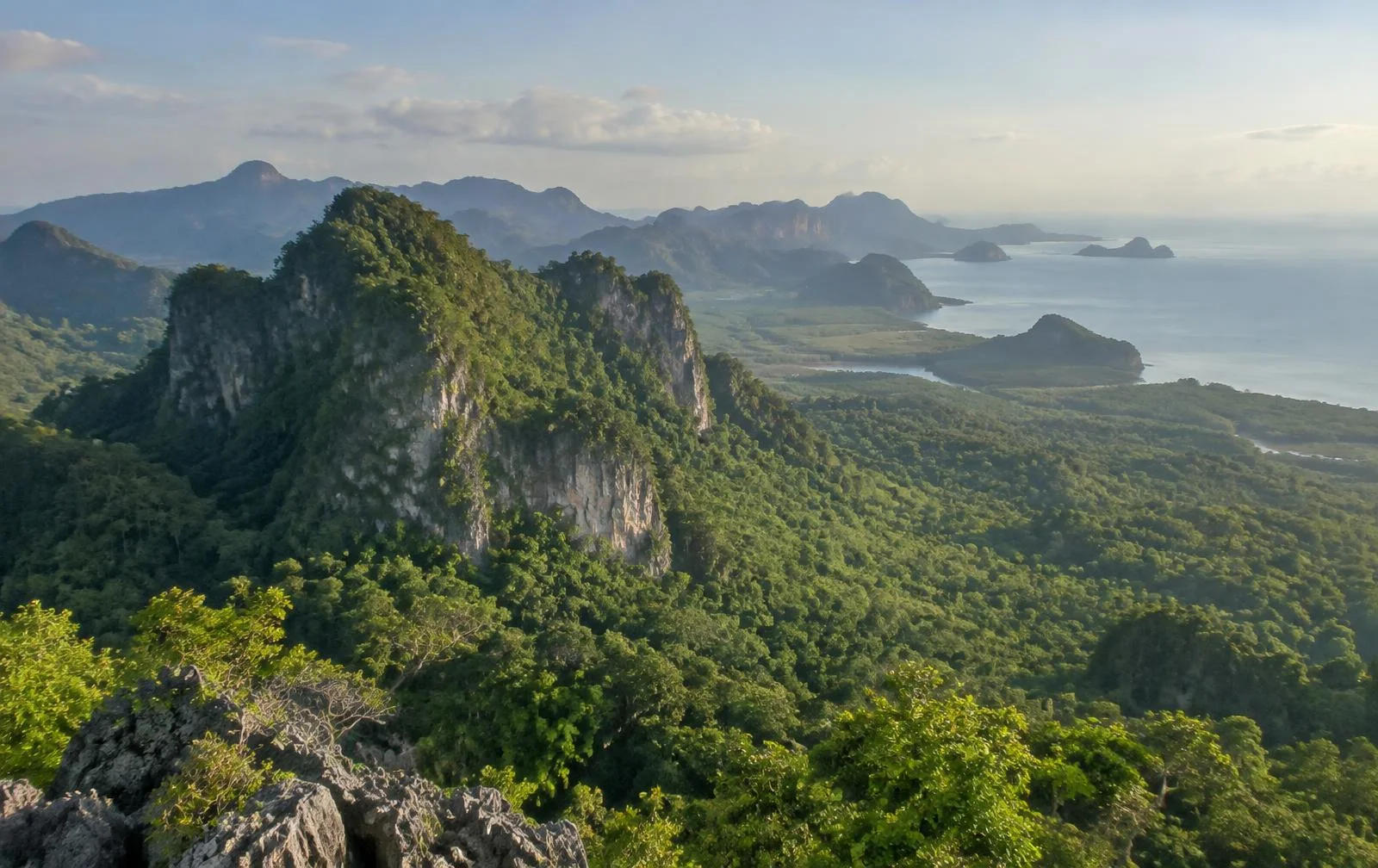
South of Hua Hin, the terrain transforms from low-lying beaches into a jagged horizon of limestone peaks. Khao Sam Roi Yot National Park, known historically as the mountain of three hundred peaks, holds distinction as Thailand's first marine and coastal national park. Here, the landscape is defined by the sharp verticality of limestone cliffs rising directly from coastal flats and saline wetlands, creating a striking contrast between horizontal waters and dramatic vertical geology.
This protected expanse illustrates how the natural topography has shaped regional settlement. Rather than continuous urban expansion, the coastal geography south of Hua Hin is naturally bounded by these formations. The interaction of weather, tidal flows, and geological uplift has carved a varied environment that remains relatively undisturbed, serving as a sanctuary for indigenous birdlife and natural coastal systems.
The Architecture of Phraya Nakhon Cave
Within the limestone formations of Khao Sam Roi Yot lies Phraya Nakhon Cave, one of the region's most notable geological landmarks. Reached via a coastal trail and an ascending path through the karst hills, the site is defined by two large collapsed chambers where subterranean space opens directly to the sky.
The natural architecture of the cavern functions as a natural lightwell. Sunlight filters through the collapsed ceilings, illuminating the vegetation that has taken root across the limestone floor. Set centrally within the primary chamber is a historic royal pavilion, constructed during the late nineteenth century. The placement of a classic Thai architectural structure inside an open-roofed geological void creates an extraordinary spatial dialogue between human construction and raw natural scale. The pavilion rests quietly under the canopy of stone, shielded from coastal winds while illuminated by descending shafts of natural light.
Visiting the cave requires navigating natural stone stairs and uneven ascents, reinforcing a sense of retreat and architectural stillness that is rarely found in open-air environments. It stands as an enduring example of how traditional Thai craftsmanship was integrated into native landforms rather than imposed upon them.
Agricultural Foothills: Monsoon Valley
Travelling inland from Hua Hin, the terrain shifts from coastal limestone to rolling agricultural hills. The geography here is marked by broad alluvial plains framed by the lower slopes of the mountain ranges that separate Thailand from Myanmar. This microclimate, characterised by gentle elevations, well-draining soils, and consistent breezes, supports agricultural initiatives that differ markedly from standard coastal cultivation.
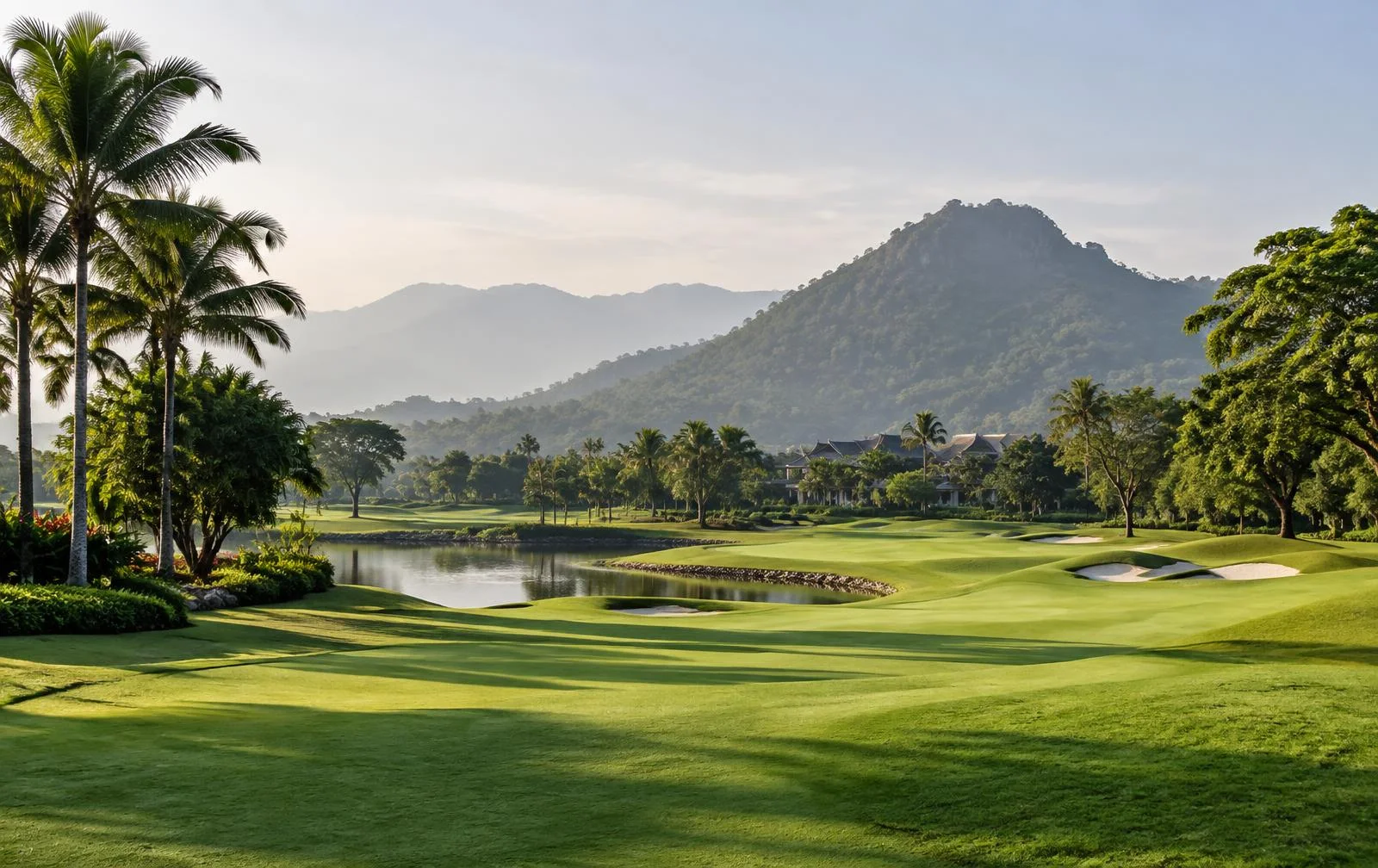
Among the most established is Monsoon Valley Vineyards, formerly known as Hua Hin Hills Vineyard. Situated in a scenic valley basin, the estate transformed former farmland into neat rows of viticulture, demonstrating the versatility of the local soil and climate. Guided tours circle the vineyard landscape, detailing the cultivation methods adapted to tropical conditions where grapevines respond to seasonal rains and sustained warmth.
The spatial experience of the vineyard provides a profound change in pace from coastal activities. The visual language is defined by structured rows of green foliage receding toward distant ridges, accompanied by understated timber pavilions designed for observing the landscape and sampling the estate's wines. The open sightlines and peaceful, rolling topography highlight the varied character of Hua Hin's interior geography.
The Wider Regional Landscape
Beyond Khao Sam Roi Yot and the agricultural valleys of the interior, the wider province of Prachuap Khiri Khan and neighbouring Phetchaburi provide access to deep cultural and natural heritage. The surrounding district features preserved historical estates, forest reserves, and traditional coastal settlements that maintain a rhythm dictated by tides and farming seasons.
These destinations form a varied network around Hua Hin, demonstrating that the region offers far more than a single coastal strip. Whether climbing the karst formations of the south or exploring the open vistas of the inland valleys, the surrounding terrain offers an abundance of quiet space, natural light, and structural beauty derived directly from the land.
A Grounded Perspective on the Region
This interplay between natural stone, open valleys, and peaceful greenery informs the broader appeal of living in the Hua Hin area. At The Vista Hua Hin, this same balance between private comfort and the surrounding regional character is reflected in every home. Consisting of a boutique collection of 12 private residences, the licensed residential development offers both single-storey V Series residences and two-storey X Series residences featuring a private lift and rooftop terrace. Backed by full Chanote land titles and structured milestone payments, the fully furnished residences, starting from THB 12.9M, provide a calm and enduring base from which to experience the diverse natural landscapes of Hua Hin.
Exclusive Private Residences
A private collection of architecturally distinctive residences in Hua Hin.
Explore the collection