Hua Hin · 18 August 2026
Transit to the Gulf: Connecting Bangkok and Hua Hin by Rail and Road
The journey between Bangkok and Hua Hin traces one of Thailand’s most established southern transit corridors, offering a choice between direct road connections and classic rail journeys through the central plains.
The Journey South from Bangkok
The passage from the capital to the coastal district of Hua Hin covers approximately two hundred kilometers, traversing the low-lying agricultural plains of central Thailand before meeting the western coastline of the Gulf of Thailand. For decades, this corridor has served as a primary conduit for travellers seeking respite from Bangkok’s dense urban core. The transition between the two settings is marked by a shift in terrain, where elevated expressways and urban sprawl gradually yield to salt flats, coconut plantations, and the limestone outcrops of Phetchaburi and Prachuap Khiri Khan.
Reaching Hua Hin involves several distinct modes of travel, each offering a different relationship to the landscape and the passage of time. Whether moving directly from Suvarnabhumi Airport or departing from central Bangkok, the primary transit routes are defined by modern rail infrastructure and established highway arteries.
Rail Travel: Krung Thep Aphiwat to Hua Hin
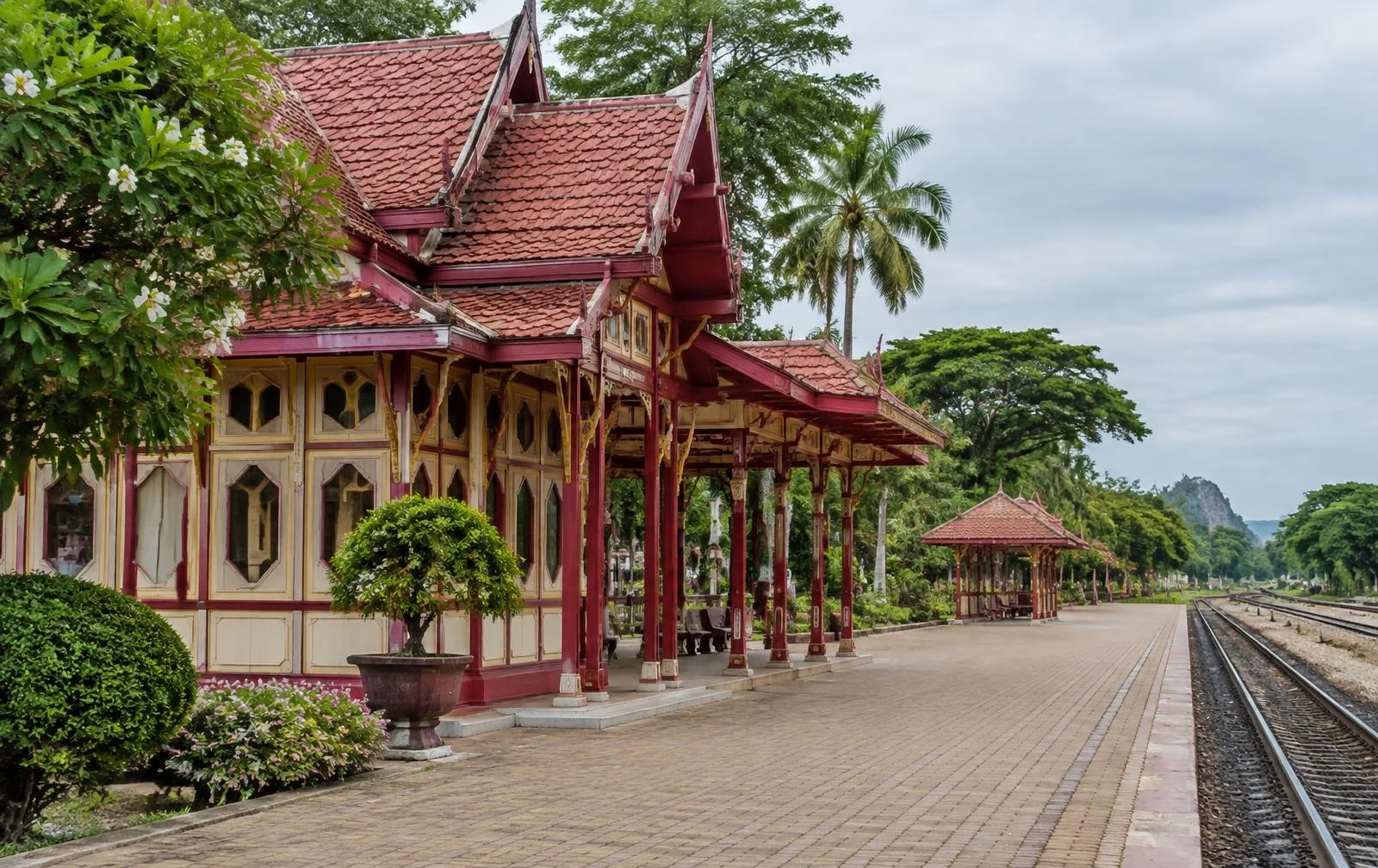
Rail transit remains an enduring method for reaching the coast, defined by an understated rhythm and panoramic views of the changing geography. Services operated by the State Railway of Thailand depart from Krung Thep Aphiwat Central Terminal, Bangkok’s central rail hub. Trains run along the southern line roughly every three hours, providing consistent intervals for departures throughout the day.
The rail journey typically spans approximately three hours and thirty-five minutes, though exact travel times vary depending on the service class and rolling stock. Among the options favored by regular travellers is the early morning diesel railcar service, which departs Krung Thep Aphiwat at 07:30. This departure allows passengers to clear the urban perimeter in the cool of the morning and reach Hua Hin before midday.
Fares across the various rail services remain accessible, ranging from ฿75 for standard seating up to ฿900 for premium, air-conditioned accommodations. As the train clears the Bangkok metropolitan boundaries, the tracks run parallel to the Gulf coast, presenting glimpses of rural communities, historic provincial stations, and open wetlands. Arriving at Hua Hin Station places passengers close to the historic town center, where the coastal atmosphere is immediately felt.
Highway Corridors and Private Road Transfers
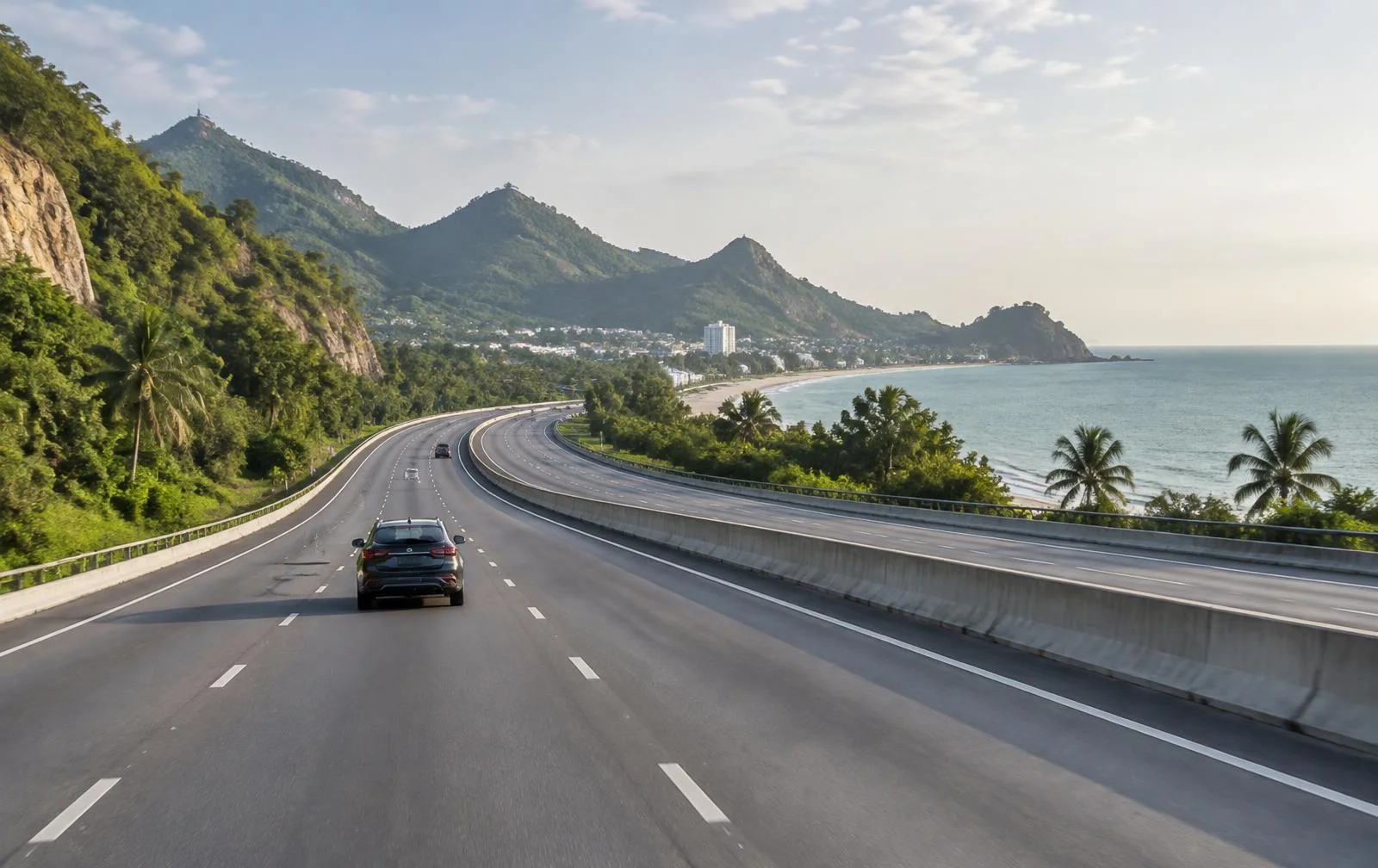
For those requiring flexibility or traveling with substantial luggage, road transport provides door-to-door convenience between Bangkok and Hua Hin. Highway links connect central Bangkok and Suvarnabhumi Airport directly to the south via Rama II Road and Phetkasem Road, passing through Samut Sakhon, Samut Songkhram, and Phetchaburi.
Private transfers represent one of the most comfortable and direct means of travel, particularly for arrivals descending from long-haul flights at Suvarnabhumi Airport. Arranging a dedicated vehicle eliminates the need to navigate city transfers or align with fixed departure timetables. Private road journeys allow passengers to travel uninterrupted directly to their destination, offering an insulated environment suitable for work or rest while the driver manages the regional highway traffic.
While journey times by road are inherently subject to traffic conditions—particularly when exiting the capital during peak commuting windows—the drive offers direct point-to-point connection. For many residents and frequent visitors, a scheduled private transfer remains the preferred standard for transit to and from the international airport.
Points of Arrival and the Rhythm of Transit
The experience of traveling to Hua Hin is defined largely by how one chooses to measure the distance. The train offers an unhurried, linear view of the landscape, inviting passengers to settle into the mechanical cadence of the railway. It preserves a tradition of travel that has linked the royal seaside town with the capital since the early twentieth century.
Road travel, conversely, is oriented around efficiency and direct access. Modern vehicles and private transfer arrangements accommodate the precise schedules of international arrivals, delivering passengers directly to private villas, resorts, and residential enclaves along the coast and in the hills.
Beyond road and rail, regional infrastructure continues to evolve along the western seaboard. Hua Hin’s local airport accommodates private and charter aviation movements, serving as a secondary entry point for non-commercial and regional flights. Regardless of the transit mode chosen, the approach to Hua Hin is characterized by an opening of the horizon, cleaner coastal air, and a noticeable deceleration from the pace of Bangkok.
A Considered Arrival at The Vista Hua Hin
For homeowners at The Vista Hua Hin, the journey from Bangkok marks the passage from a bustling metropolitan center into a private, residential environment. Situated in a calm inland enclave, The Vista Hua Hin comprises a boutique collection of 12 private residences, featuring both the single-storey V Series and the two-storey X Series, complete with private lifts and rooftop terraces. Developed with full Chanote title and structured around phased construction milestones, the fully furnished residences—available from THB 12.9M—offer an architectural retreat that feels entirely removed from urban density, while remaining easily accessible via the region’s established rail and road links.
Exclusive Private Residences
A private collection of architecturally distinctive residences in Hua Hin.
Explore the collection