Property · 11 August 2026
Legal Frameworks: How Foreign Buyers Own Property in Thailand
Understanding property acquisition in Thailand requires navigating a distinct legal landscape where land and structural ownership are treated as separate legal entities under national law.

Under the Thailand Civil and Commercial Code and the Land Code Act B.E. 2497, real estate ownership for foreign nationals is governed by specific statutory boundaries. While foreign buyers face restrictions regarding the direct freehold ownership of land, Thai law provides clear, well-established mechanisms for acquiring property, securing long-term land rights, and holding full legal ownership of buildings and condominium units.
Navigating this legal landscape requires understanding how the Land Department registers interests, how property titles are documented, and how distinct rights can be layered to establish secure, transparent control over private residences.
The Legal Separation of Land and Building
A fundamental principle of Thai property law is the legal division between land and the physical structures erected upon it. Under the Civil and Commercial Code, a building is not intrinsically bound to the freehold title of the underlying soil. This distinction forms the basis for foreign villa and house ownership.
While a foreign national cannot register freehold title to land under normal circumstances, there is no statutory prohibition against a foreigner holding direct, freehold ownership of a building. When acquiring a landed property, a foreign buyer typically obtains registered ownership of the physical villa or residence itself. The rights to the underlying land are then secured through a legally recognized framework, most commonly a registered long-term leasehold or a real right registered directly on the title deed at the local Land Office.
Registered Leasehold Rights
For landed villas, long-term leasehold remains one of the primary and most practical legal instruments. Thai law permits foreign individuals to lease land, with the maximum statutory lease term set at 30 years under the Civil and Commercial Code.
To be enforceable beyond a three-year period, any lease agreement must be formally registered on the reverse side of the land title deed at the relevant Land Office. Once registered, the lease acts as a real right (jus in re) attached to the property. It remains valid and enforceable against third parties, surviving any transfer of the underlying land’s ownership during the registered term. Agreements frequently include contractual provisions regarding renewal terms for subsequent 30-year periods, though under statutory law, each extension requires mutual agreement and a separate registration at the conclusion of the initial term.
Statutory Rights: Superficies and Usufruct
Beyond simple leasehold agreements, the Civil and Commercial Code establishes specific proprietary rights that offer additional legal certainty for non-Thai nationals.
One such mechanism is the right of superficies (Sections 1410 to 1416). A registered superficies grants an individual the legal right to own structures, buildings, or plantations upon or beneath land owned by another party. By registering a superficies at the Land Office, the foreign buyer creates an unassailable legal separation between the land and the home, ensuring that the ownership of the building remains independent of the land's titleholder for the duration of the registered right.
Another registered instrument is the usufruct (Sections 1417 to 1428). A usufruct provides a person the legal right to use, manage, and derive benefits or income from a property. A usufruct can be registered for a fixed term of up to 30 years or for the natural lifetime of the usufructuary. Unlike lease agreements, which may theoretically be transferred or inherited if contractually stipulated, a usufruct is an intensely personal right: it cannot be transferred to heirs and automatically extinguishes upon the death of the registered holder.
Condominium Freehold and the Foreign Quota
Where outright freehold ownership of real estate is desired without the need for an underlying land structure, the Condominium Act provides a direct path. Under this legislation, foreign buyers are permitted to purchase and hold full freehold title to individual residential condominium units.
This ownership is subject to a strict statutory threshold known as the foreign ownership quota. By law, foreign nationals may collectively hold freehold title to no more than 49 percent of the total aggregate saleable floor area within a single registered condominium project. The remaining 51 percent of floor area must remain Thai-owned. To register a foreign freehold title at the Land Office, buyers must present mandatory documentation proving that the full purchase funds were transferred into Thailand from abroad in foreign currency.
Due Diligence and Title Deeds
Regardless of the ownership structure selected, the security of any property purchase depends fundamentally on the classification of the underlying title deed. In Thailand, land documentation varies widely, ranging from possessory claims to fully surveyed titles.
The highest standard of land title is the Chanote (formally Nor Sor 4 Jor). A Chanote deed represents absolute freehold ownership. Land categorized under a Chanote has been accurately surveyed using GPS networks and marked with official Land Department concrete markers. It is the only land classification that allows complete, unencumbered registration of leases, mortgages, superficies, and property transfers with absolute legal clarity. Prospective purchasers must confirm that a development holds full Chanote title before entering into binding agreements.
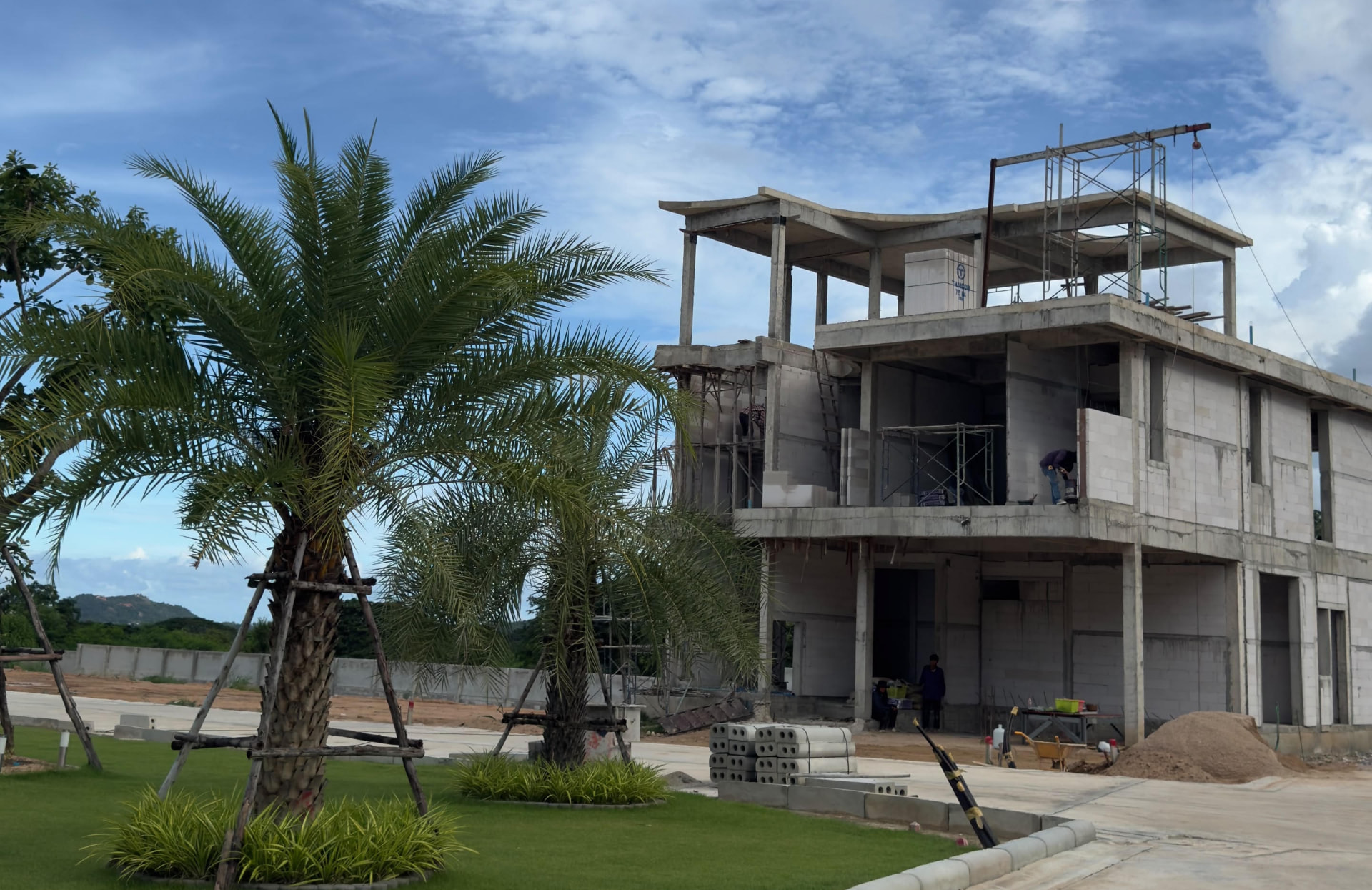
At The Vista Hua Hin, legal security and architectural precision operate in unison. Comprising a boutique collection of 12 private residences—featuring V Series single-storey residences and X Series two-storey residences complete with an internal lift and private rooftop terrace—the development is fully licensed and built upon full Chanote title land, providing owners with unambiguous legal registration under Thai property law.
Exclusive Private Residences
A private collection of architecturally distinctive residences in Hua Hin.
Explore the collection